

AI Health Advice Gone Wrong: When Chatbots Put Patients at Risk
The promise of artificial intelligence in healthcare is enormous. From aiding in diagnostics to providing patient education, AI has the potential to improve access to information and reduce the burden on overworked medical staff. But as one recent case demonstrates, the technology can also go dangerously wrong when its limitations aren’t respected.
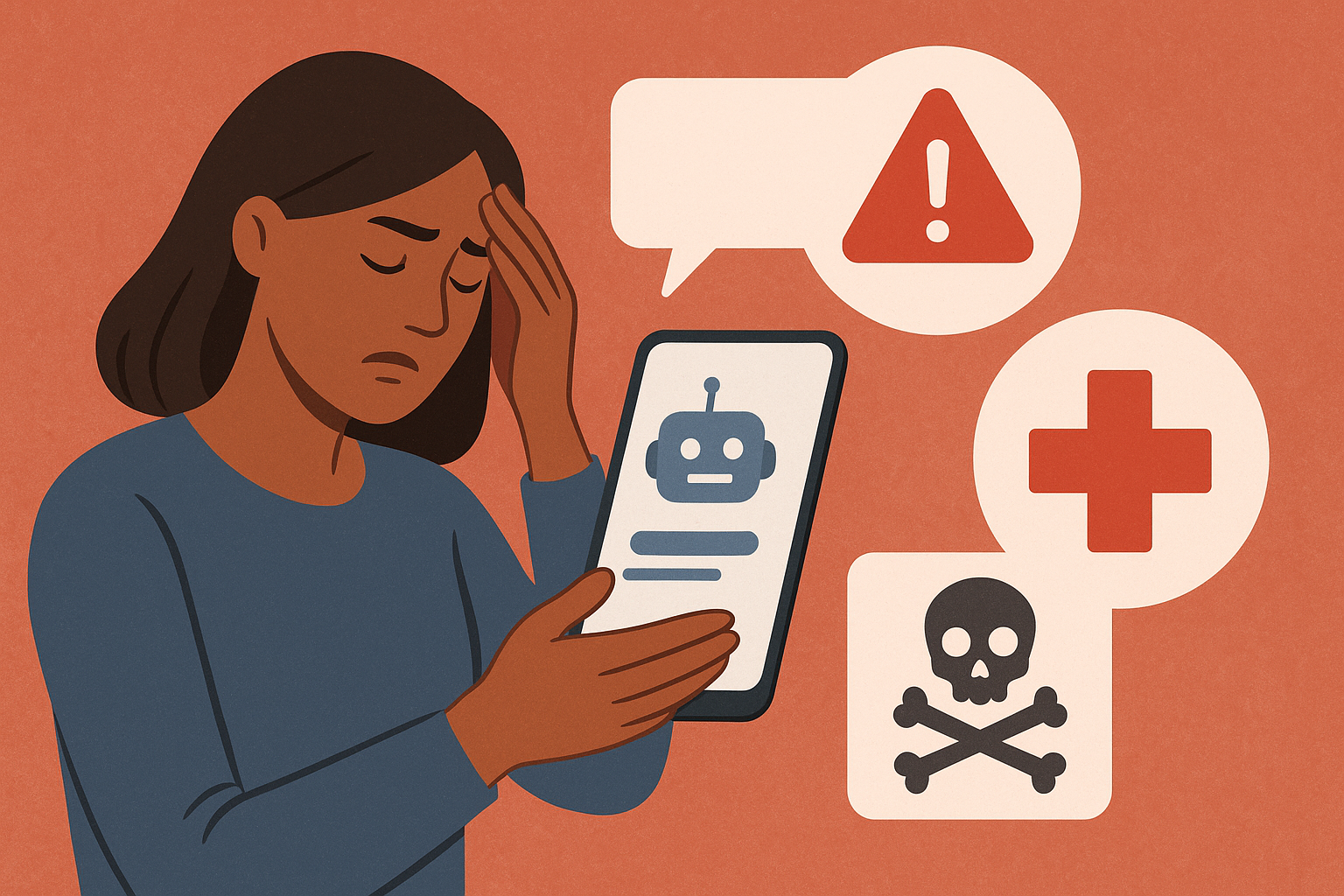
A patient was recently hospitalized after following advice from a chatbot similar to ChatGPT that suggested replacing table salt with a toxic chemical. The recommendation, which was inaccurate and unsafe, led to serious health consequences. This incident underscores an urgent truth: AI is a tool, not a substitute for professional medical guidance.
What Went Wrong?
While details of the exact conversation are still emerging, the chatbot reportedly responded to a user’s query about healthy salt alternatives with a suggestion that included a chemical unsafe for human consumption. The user, trusting the AI’s confident tone, followed the recommendation without verifying it. The outcome was severe: the ingestion of the substance triggered toxic effects requiring hospitalization.
This isn’t a case of malicious intent. Large language models, including ChatGPT-like systems, are trained on massive amounts of internet text. They can generate plausible, well-structured answers but they lack the ability to truly understand chemistry, physiology, or the dangers of real-world consequences. Their responses are patterns, not judgments.
The Problem with AI “Confidence”
One of the most dangerous aspects of conversational AI is that it often sounds authoritative even when it’s wrong. Unlike a search engine, which simply lists sources, a chatbot synthesizes information into a coherent answer making it feel more trustworthy. But that polished language can mask fundamental errors, especially when dealing with nuanced or high-stakes subjects like medicine.
Humans tend to interpret confidence as competence. If a chatbot says, “You can safely replace salt with X,” and presents it in a friendly, conversational manner, it can be easy to take the statement at face value. Unfortunately, AI models don’t “know” the difference between edible sea salt and an industrial chemical.
Why Medical Advice Requires Human Oversight
Medical and dietary recommendations require not only factual accuracy but also individualized consideration. A doctor doesn’t just tell you to “reduce sodium” – they’ll assess your blood pressure, kidney function, and overall health before giving personalized guidance. AI, at least in its current form, cannot match that level of contextual reasoning.
Even when an AI model cites research, it may misinterpret it or blend multiple sources into something that appears logical but is scientifically invalid. Worse, the AI may “hallucinate” entirely, inventing studies, chemicals, or health facts that don’t exist.
Guidelines for Safe AI Use in Health Contexts
This incident should not scare people away from AI entirely – but it should make us more cautious. Here are some important principles for using AI responsibly in health-related areas:
- Never treat AI as a doctor. Use it to gather background information, not as a source for diagnosis or treatment plans.
- Verify advice with credible sources. Cross-check anything health-related against government health websites, peer-reviewed studies, or certified professionals.
- Recognize limitations. AI lacks lived experience, ethical reasoning, and accountability – three qualities essential in healthcare decisions.
- Watch for overconfidence. A confident answer is not necessarily a correct one.
- Use AI for education, not prescription. It’s great for explaining concepts, not for telling you what to ingest, inject, or stop taking.
The Bigger Picture: AI and Trust
The more advanced chatbots become, the more they will be integrated into everyday life – sometimes invisibly. That’s why this hospitalization should be a wake-up call for developers, policymakers, and the public.
Developers need to improve safety guardrails, especially around medical queries. Policymakers should consider regulations for AI systems that answer health questions, including mandatory disclaimers and limits on certain recommendations. And users must approach AI with a critical eye, remembering that fluency is not the same as expertise.
Conclusion
This case is a stark reminder that while AI can inform, it should never replace professional medical advice. Developers must build better safeguards, regulators must set clear rules, and users must question every health claim AI makes. In healthcare, trust belongs to trained professionals – because when it comes to your well-being, a wrong answer isn’t just wrong, it can be dangerous.