

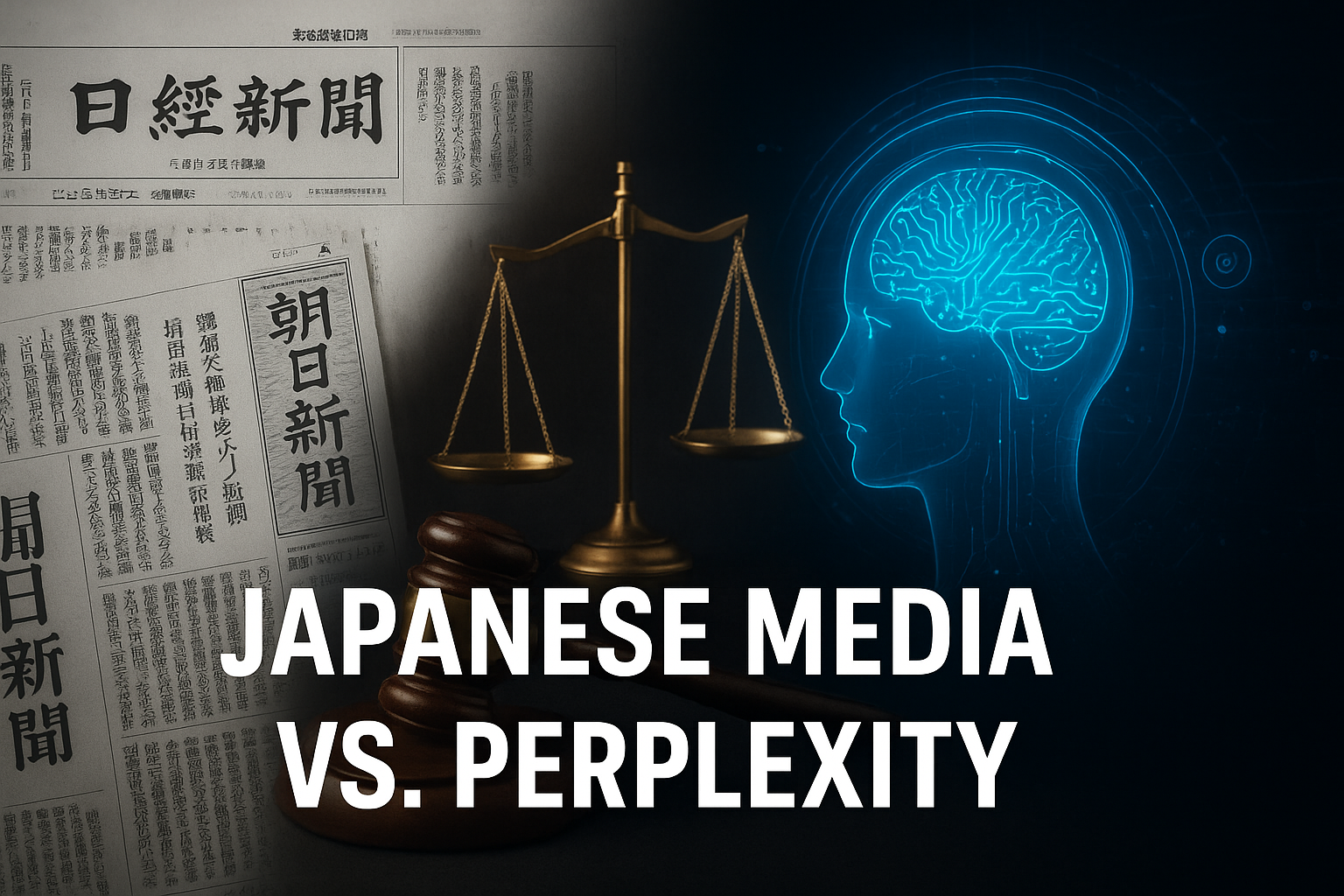
Japanese Media vs. Perplexity: A Landmark AI Copyright Battle
The rapid rise of artificial intelligence has brought with it a wave of legal and ethical questions, especially regarding the use of copyrighted content to train AI models. One of the most significant cases in recent months is Japanese Media vs. Perplexity, a lawsuit filed in Tokyo by leading Japanese media giants Nikkei and Asahi Shimbun against the U.S.-based AI search company, Perplexity. This case has quickly become a focal point in the global debate about copyright, journalism, and artificial intelligence.
The Background
Perplexity is an AI-powered search and answer engine that competes with the likes of ChatGPT, Bing, and Google’s Gemini. By aggregating and synthesizing information from vast amounts of online content, it provides quick, conversational answers to user queries. However, questions have been raised about whether it properly respects copyright laws in the process.
Nikkei and Asahi Shimbun, two of Japan’s largest and most respected media organizations, allege that Perplexity scraped and reproduced their news articles without permission. According to the plaintiffs, the AI system not only ingested their copyrighted material during training but also reproduced substantial parts of their articles in its responses. They argue this amounts to a clear violation of copyright law and undermines the sustainability of journalism.
The Lawsuit
The lawsuit, filed in Tokyo District Court, seeks both deletion of the allegedly misused content and damages estimated at 2.2 billion yen (around $15 million USD) per company. The case is one of the largest copyright claims brought against an AI firm outside the United States, highlighting how international the AI copyright battle has become.
The plaintiffs claim that Perplexity’s AI threatens their business model by making their work available to readers without directing traffic back to their websites. This, they argue, diminishes subscription revenues, ad revenues, and long-term trust in professional journalism.
Why This Case Matters
This lawsuit is about more than just two media companies versus one AI firm – it represents a clash between the rights of creators and the business models of generative AI companies. If the court rules in favor of Nikkei and Asahi Shimbun, it could establish a precedent that AI firms must negotiate licensing deals or face significant financial penalties for using copyrighted works without permission.
Conversely, if Perplexity wins, it could strengthen the argument that using published articles for AI training falls under “fair use” or an equivalent concept in Japanese law. Such a decision might accelerate AI adoption but also deepen the crisis for traditional journalism.
Global Implications
The Japanese Media vs. Perplexity case mirrors similar lawsuits worldwide:
- The New York Times vs. OpenAI and Microsoft in the U.S., alleging unauthorized use of journalistic content.
- Getty Images vs. Stability AI in the U.K., concerning billions of copyrighted images.
- Authors Guild lawsuits against AI companies over the use of books and written works.
These cases collectively represent a growing movement among content creators to push back against what they see as “uncompensated exploitation” of their intellectual property.
Possible Outcomes
1.Settlement – Perplexity may choose to negotiate a licensing deal with Nikkei and Asahi to avoid a prolonged court battle.
2.Plaintiffs Win – This would set a powerful precedent in Japan, potentially requiring AI firms to pay licensing fees for media content.
3.Defendant Wins – A victory for Perplexity would embolden other AI companies to continue scraping content without licensing agreements, possibly leading to further legal clashes.
Conclusion
The Japanese Media vs. Perplexity lawsuit is a critical moment in the evolving relationship between AI and journalism. At stake are not just billions in potential damages, but the future balance between innovation and intellectual property rights. As courts around the world weigh in, one thing is clear: AI and copyright law are on a collision course that will shape the future of information, creativity, and business for decades to come.
👉 If you found this analysis useful, make sure to check out our other blogs on Perplexity AI to explore more insights into its technology, controversies, and legal challenges.
Sources
https://www.japantimes.co.jp/news/2025/08/26/japan/crime-legal/japan-newspapers-sue-ai-startup
https://www.ft.com/content/79a88d1a-d914-4188-8792-0a20973b39a1