

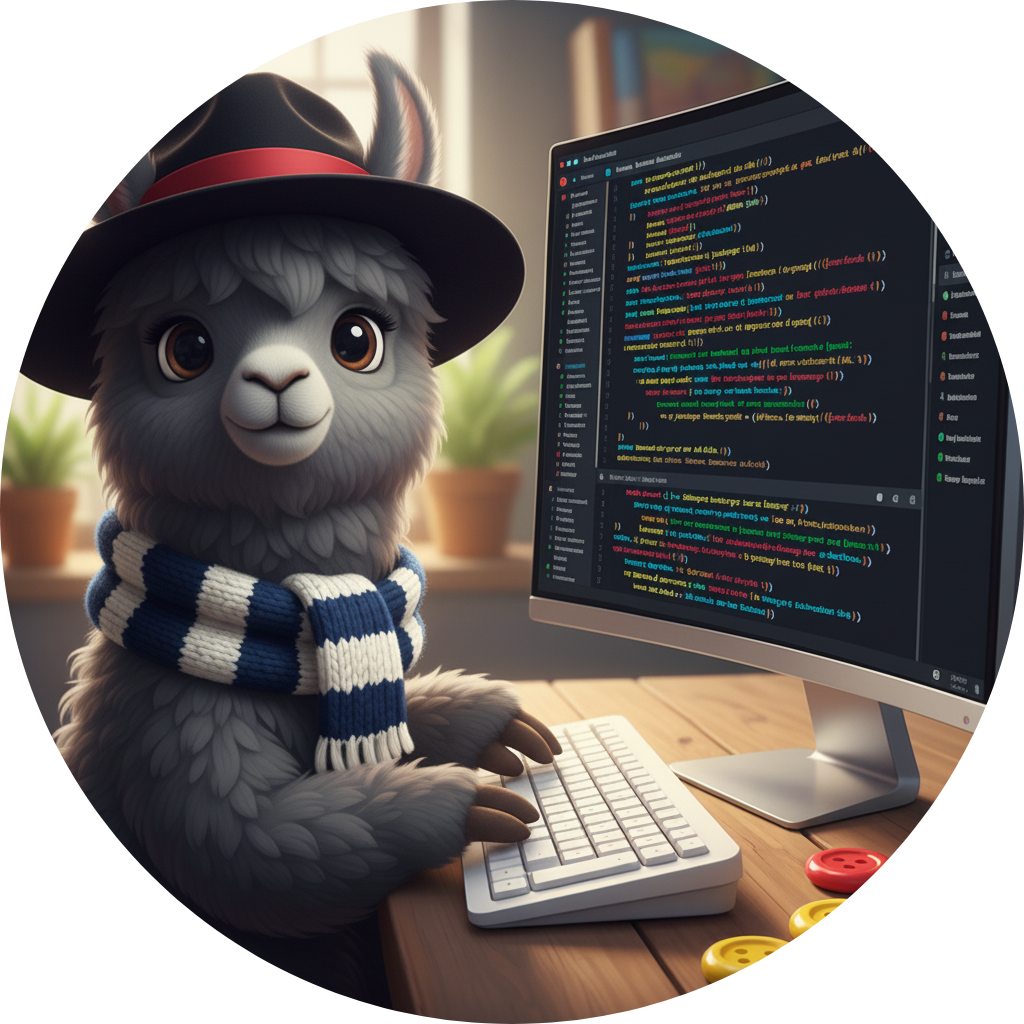
What is llama.cpp?
LLama.cpp: The Open-Source Hero of Local LLM Inference
Imagine Tony Stark building his first Iron Man suit in a cave limited resources, but limitless vision. That’s what Georgi Gerganov did with llama.cpp.
While big AI companies insisted that large language models (LLMs) could only run in the cloud, Gerganov quietly built a tool that asked:
“What if you could run LLMs locally on your laptop?”
This simple question became the spark that ignited the local LLM inference revolution.
Before llama.cpp: Why LLMs Were Trapped in the Cloud
For years, running large language models like GPT-3 or Gemini 1.0 meant relying on massive GPU clusters and expensive infrastructure.
- Cloud dependence: No option to run models on personal devices.
- High costs: Paid per token, per API call.
- Privacy risks: Sensitive data routed through third-party servers.
- Barriers for developers: Indie makers, startups, and hobbyists were locked out.
The message was clear: LLMs belonged to cloud giants.
Enter llama.cpp: The Breakthrough in Local AI Inference
In early 2023, Meta released LLaMA as a research model. Within weeks, llama.cpp, a lightweight C++ library, made it possible to run LLaMA directly on consumer hardware.
No massive GPUs.
No corporate data centers.
Just clever quantization, optimized code, and a laptop CPU.
It was a mic-drop moment: AI doesn’t have to live in the cloud anymore.
Why llama.cpp Changed the AI Landscape
1. Proved Local Inference Works
A 7B parameter model could run smoothly on a MacBook.
2. Kickstarted an Ecosystem
Projects like GPT4All, KoboldCpp, and Ollama were born from llama.cpp.
3. Changed the Narrative
Suddenly, “too big for local” was no longer true.
Just like open-source “Stone Soup,” one small tool inspired an entire AI ecosystem of contributors.
Privacy, Control, and Cost: Why Local AI Matters
- Privacy: Keep sensitive data inside your firewall.
- Control: No reliance on third-party APIs.
- Cost savings: One-time hardware vs endless API fees.
- Offline power: AI that works even without internet access.
For industries like healthcare, law, and finance, llama.cpp is a golden ticket to secure AI adoption.
Under the Hood: The Technical Innovations of llama.cpp
How did this “Iron Man suit” of AI actually work?
- Quantization: Shrinking 16-bit weights to 8-bit or 4-bit, reducing memory by 2–4x.
- CPU-first optimizations: Hand-tuned C++ kernels with SIMD for speed.
- Cross-platform portability: Runs on macOS, Windows, Linux, iOS, and Android.
- Lightweight model formats: GGML and GGUF standardizing quantized weights.
It was bold engineering that proved local AI inference is possible.
The Legacy of Georgi Gerganov
Gerganov may not be a household name like Sam Altman or Demis Hassabis, but his work sparked a paradigm shift. He proved that AI power doesn’t have to stay locked in Silicon Valley server racks.
He showed the world that with enough ingenuity, one person can tilt the direction of an entire industry.
Why C++ Specifically for llama.cpp
Python is great for research, but C++ delivers raw performance.
- Faster inference on CPUs
- Leaner memory footprint
- Cross-platform portability
This is why llama.cpp can run efficiently on laptops, desktops, and even phones.
Hardware Requirements: Can You Run It?
Essential Requirements:
- OS: Windows, macOS, Linux (64-bit)
- CPU: Modern multi-core with strong single-core speed
- RAM (varies by model):
- 7B → 4 GB
- 13B → 8 GB
- 30B → 16 GB
- Disk: Several GBs per model
Recommended for Performance:
- NVIDIA GPU (CUDA support)
- Fast SSD / NVMe storage
If you’ve got a halfway decent laptop, you can run llama.cpp.
Merits and Trade-Offs of llama.cpp
Merits
- Free and open-source.
- Runs LLMs on consumer hardware.
- Sparked the local inference movement.
Trade-Offs
- Local models lag behind frontier-scale LLMs.
- Running 70B+ parameter models is still impractical for most.
- Quantization slightly reduces accuracy.
But the goal wasn’t perfection it was possibility.
Conclusion: AI Belongs With You
llama.cpp is the underdog invention that gave AI back to the people.
It proved that AI doesn’t have to be locked in the cloud.
It showed that developers, companies, and hobbyists can own their AI future privately, securely, and cost-effectively.
Just like Tony Stark’s first suit, llama.cpp wasn’t polished. But it was enough to prove the point:
AI can live on your laptop and in your hands.
Coming Up Next
In the next article, we’ll cover:
How to convert any Hugging Face model into GGUF format so it runs smoothly on llama.cpp.
Stay tuned.