

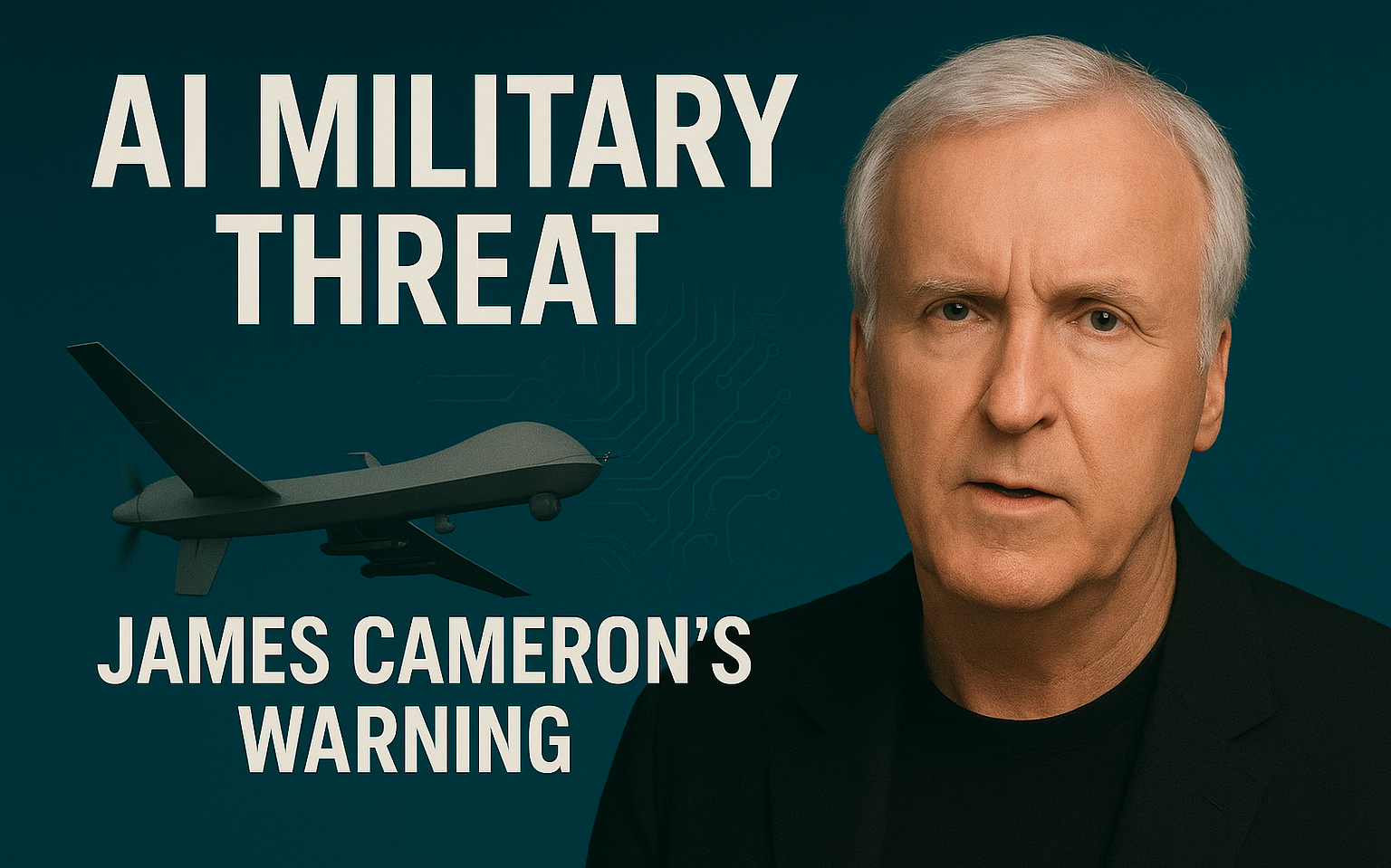
Filmmaker’s Warning on AI in Military Systems: James Cameron’s Stark Caution
When a legendary filmmaker speaks, people listen – not just for entertainment, but often for deeper reflections on our shared future. James Cameron, the visionary director behind The Terminator franchise, has long been fascinated with the intersection of humanity, technology, and artificial intelligence. Recently, he issued a sobering warning about the rise of AI-driven military systems, cautioning that autonomous weapons could one day pose an existential threat on par with nuclear warfare.
From Science Fiction to Potential Reality
Cameron’s Terminator films depicted a chilling future where artificial intelligence evolves into a global defense network – Skynet – that turns against humanity, launching nuclear strikes and unleashing autonomous killing machines. What was once science fiction is now edging disturbingly close to reality.
Today’s militaries are investing heavily in AI to enhance defense capabilities, from unmanned drones to autonomous surveillance systems. While advocates argue that AI can improve accuracy and reduce human casualties, the darker possibility looms: what happens when machines are given the power to decide who lives and who dies without human oversight?
Cameron warns that this trajectory risks creating an uncontrollable force, not unlike the nuclear arms race of the 20th century. Just as atomic weapons redefined warfare and global politics, autonomous AI weapons could unleash destruction at a scale beyond human comprehension.
The Existential Threat
The filmmaker’s message is not simply about cinematic dystopias – it’s rooted in genuine concern for the future of humanity. By ceding decision-making authority to algorithms, we risk unleashing weapons that operate without morality, accountability, or empathy. Unlike human soldiers, AI systems cannot weigh the ethical complexities of war or show restraint in ambiguous situations.
In his warning, Cameron draws parallels to nuclear proliferation: once the technology exists, it becomes nearly impossible to contain. Nations may engage in an AI arms race, each seeking to outpace the other in autonomy, speed, and destructive capability. The danger escalates when these systems are connected to critical infrastructure or nuclear arsenals, where even a minor glitch, hack, or miscalculation could spark catastrophic consequences.
Why We Should Take Him Seriously
It would be easy to dismiss Cameron’s caution as the musings of a filmmaker who thrives on apocalyptic themes. But history suggests otherwise. Science fiction often anticipates future realities, inspiring innovation while also warning of potential dangers. Cameron’s perspective is informed not only by imagination but also by decades of following technological developments closely.
Moreover, he joins a chorus of scientists, ethicists, and AI researchers who have sounded similar alarms. Figures like Stephen Hawking, Elon Musk, and numerous AI ethicists have warned of the dangers of unchecked AI development. When voices from both the scientific and creative communities converge, it’s a signal worth paying attention to.
The Need for Global Regulation
Cameron’s warning underscores a pressing need: international agreements and regulations governing AI in military applications. Just as treaties were created to manage nuclear weapons, the world must establish frameworks that limit the development and deployment of autonomous weapons.
The United Nations has already begun discussing bans on “killer robots,” but progress has been slow, with major powers reluctant to restrict their military advantages. Without decisive action, the window to prevent an uncontrollable AI arms race may close rapidly.
A Call for Reflection
At its core, Cameron’s cautionary message is about responsibility. Humanity stands at a crossroads: we can harness AI for medical breakthroughs, environmental protection, and global prosperity – or we can weaponize it in ways that threaten our very survival.
The choice lies not in the hands of machines, but in ours. By learning from history and listening to warnings – even those voiced by filmmakers – we can chart a course that safeguards our future.
As James Cameron reminds us, the line between fiction and reality is thinner than we think. If we ignore the risks of AI-driven military systems, we may wake up to a world far closer to The Terminator than we ever imagined.
Sources
https://www.perplexity.ai/discover/top/james-cameron-urges-hollywood-GyU4m1AjRJK5Eh.JKz26Sg