

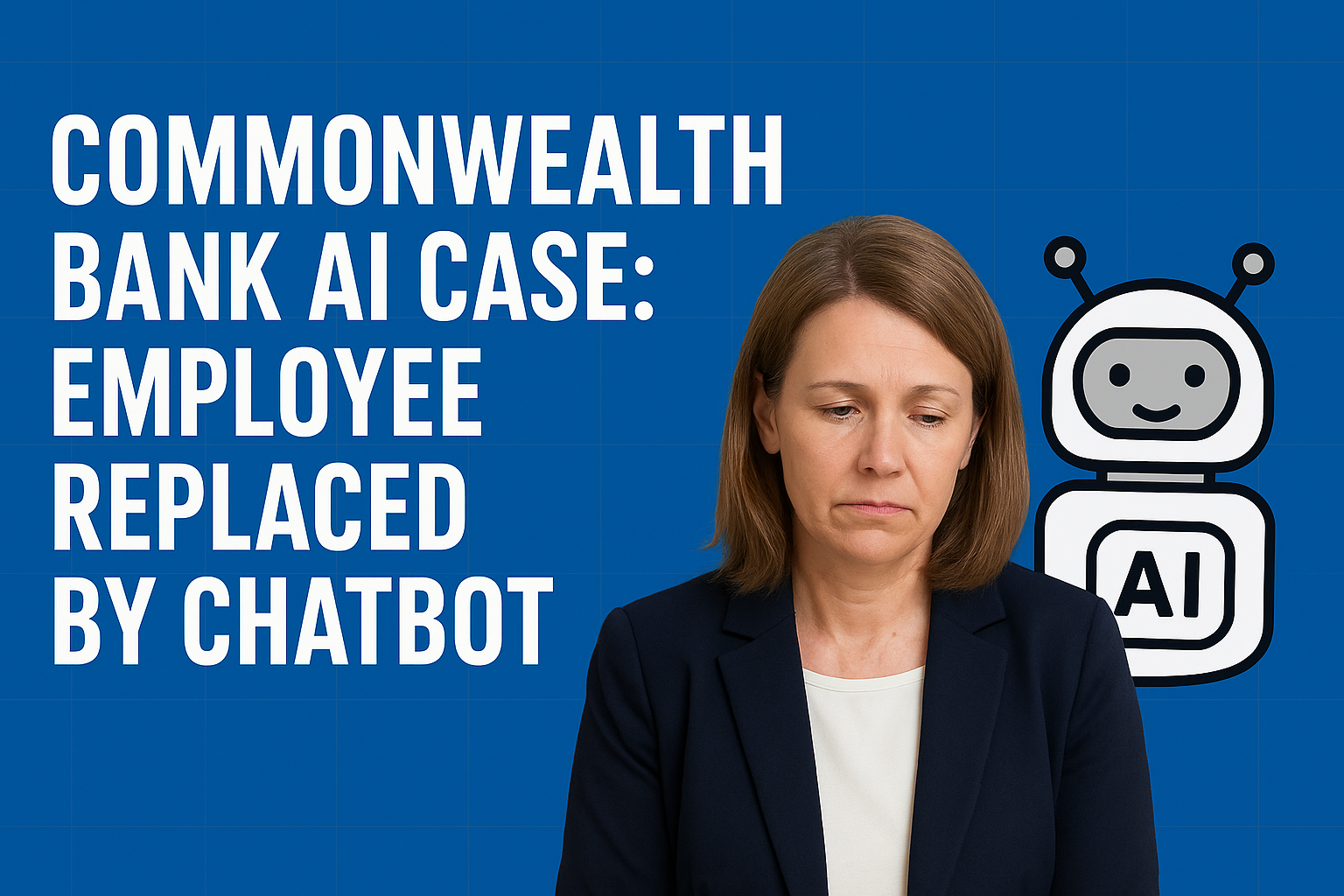
Bank Employee “Tricked” Into Training Her AI Replacement: The Commonwealth Case
Artificial Intelligence (AI) continues to disrupt industries worldwide, but not always in ways that inspire confidence. A controversial case has emerged from the Commonwealth Bank, where a loyal employee of 25 years was allegedly manipulated into training the very AI system that would ultimately replace her. This story has sparked widespread debate about workplace ethics, AI adoption, and corporate responsibility.
What Happened?
The employee, who had dedicated decades of service to the bank, reported that she was instructed to help train an AI chatbot during her final months at work. Unbeknownst to her, this system was being designed to automate customer service roles – including her own. Once the chatbot was ready, she was laid off.
Ironically, the rollout did not go smoothly. Customers complained about long wait times and poor AI responses, forcing the bank to rehire some human staff temporarily. This raised questions not only about the effectiveness of the AI but also about the fairness of the process.
Why This Case Matters
The Commonwealth case is more than a single employee’s story – it is a warning sign about how AI can be misused in corporate environments. The controversy touches on several key issues:
- Workforce Exploitation: Employees may be unknowingly contributing to the development of systems that replace their jobs.
- Transparency Failures: The lack of clear communication around the purpose of the training created mistrust.
- Short-Term vs. Long-Term Thinking: The failed rollout highlights the dangers of rushing AI deployment without proper planning.
Ethical and Legal Implications
This case underscores the urgent need for ethical guidelines on AI use in workplaces. Should companies be required to disclose if employee contributions are being used to automate roles? Should workers have rights to opt out? These questions are now central to labor and technology policy discussions.
Legal experts warn that without new protections, employees risk being blindsided by similar situations. Some labor unions are already calling for stricter regulations around AI adoption and its impact on human jobs.
Broader Impact on AI in the Workplace
The Commonwealth Bank controversy reflects a growing global concern: as AI becomes more powerful, how do we balance efficiency gains with human dignity? While automation can cut costs, it risks alienating employees and customers if introduced carelessly. The failure of the bank’s chatbot rollout illustrates that human expertise remains essential, especially in customer-facing industries.
Other companies are closely watching the case. If mishandled, AI adoption can damage not only employee morale but also brand reputation and customer trust.
Conclusion
The Commonwealth Bank case serves as a cautionary tale at the intersection of AI, ethics, and employment. It highlights the need for transparency, fair treatment of employees, and responsible deployment of new technologies. As AI continues to reshape the workplace, businesses must remember that innovation without integrity can lead to both reputational and operational failure.