

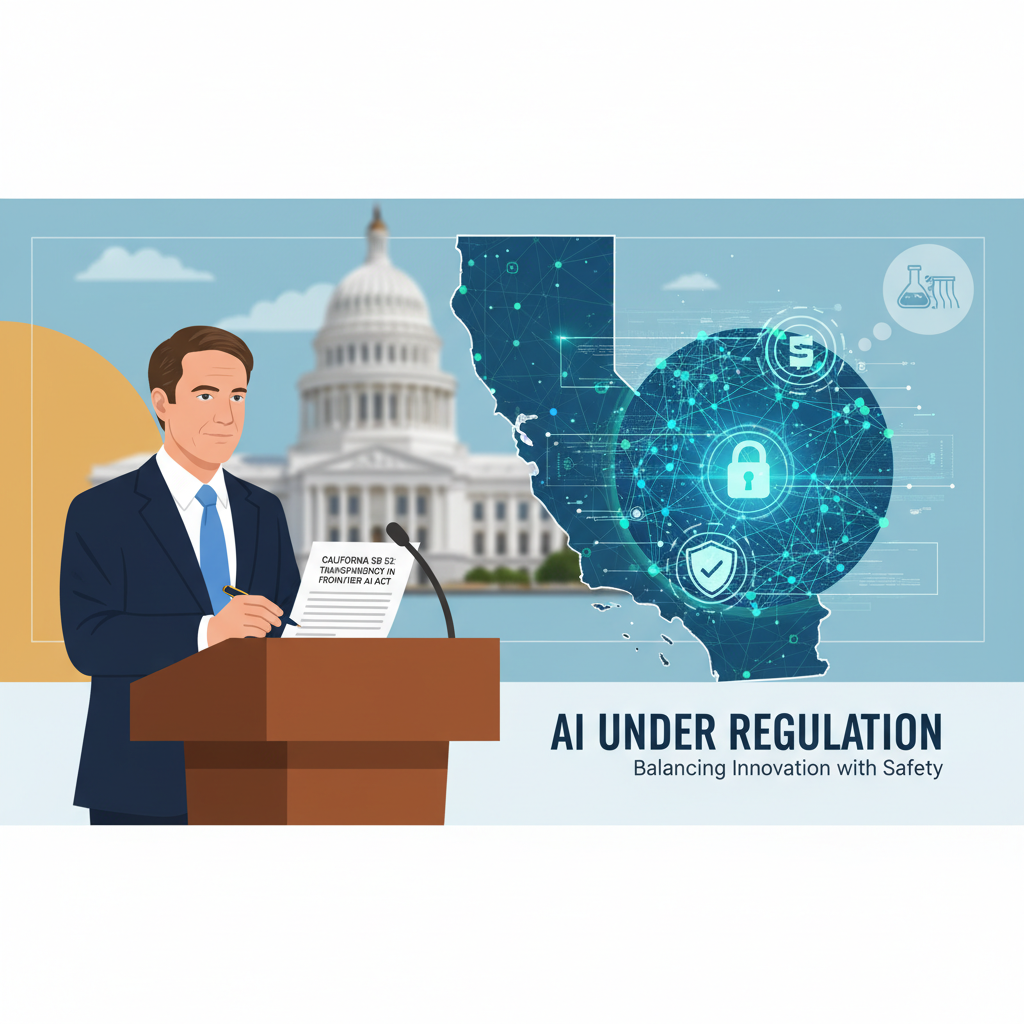
California has made history by signing a landmark law that establishes safety protocols for high-powered artificial intelligence systems. Governor Gavin Newsom officially approved the legislation, which aims to prevent the misuse of AI in critical sectors while promoting transparency, accountability, and public trust.
High-Compute AI Under Regulation
The law targets “high-compute AI” systems—advanced models that could potentially be used in harmful ways, including developing bioweapons or compromising critical infrastructure. Companies deploying these systems are now required to implement safety mechanisms and publicly disclose them, striking a balance between innovation and public safety.
Mandatory Incident Reporting and Whistleblower Protections
A key feature of the legislation is mandatory incident reporting. AI developers must report any safety-related incidents within 15 days. Violations can result in fines of up to $1 million.
The law also includes whistleblower protections, encouraging employees to report unsafe practices without fear of retaliation. These measures ensure rapid oversight and accountability in the deployment of advanced AI systems.
Transparency Through Public Research Access
The legislation emphasizes transparency and collaboration. Companies must provide access to AI research through a public research cloud, enabling independent experts to review safety measures. This framework encourages collaboration between policymakers, industry leaders, and academia, setting a global example for responsible AI development.
Balancing Innovation with Safety
This law builds on extensive consultations with AI safety experts, researchers, and industry stakeholders. It is a revised version of a previously vetoed bill, carefully adjusted to protect public safety without stifling innovation.
Experts have praised California for its forward-thinking approach. Dr. Lillian Chen, an AI safety researcher, commented, “California is setting a global precedent. This legislation demonstrates that governments can regulate AI responsibly, ensuring innovation continues while minimizing societal risks.”
Why This Matters
As AI becomes increasingly integrated into sectors like healthcare, finance, and transportation, safety-focused legislation has never been more urgent. California’s law proves that governments can foster technological progress while enforcing ethical standards, transparency, and accountability.
In summary, California’s AI safety legislation is more than a regulatory milestone—it is a blueprint for responsible innovation. By requiring clear safety protocols, incident reporting, and public research access, the state is shaping standards that could influence AI governance worldwide.