

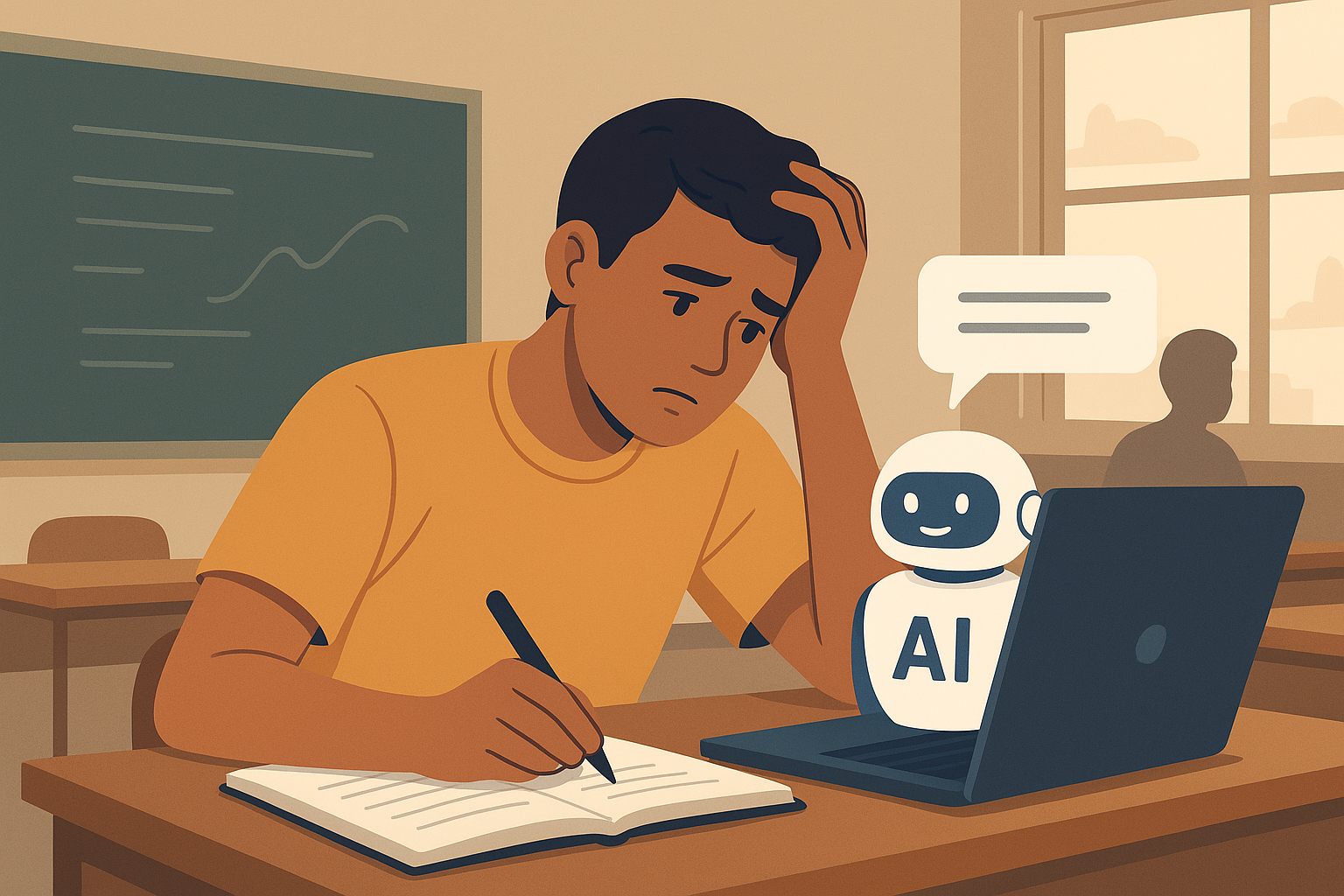
Academic Concerns Over AI Misuse in Universities: A Growing Debate
Artificial Intelligence (AI) has quickly become a part of everyday academic life. From research support to instant explanations, students across the globe are using AI tools to speed up their work. In India and Southeast Asia, where universities are known for competitive exams and heavy coursework, AI adoption is even more rapid. But with this convenience comes a rising wave of concern: are students misusing AI in ways that undermine real learning?
The New Shortcut to Learning
For today’s students, AI-powered tools like ChatGPT, Gemini, and others have become the modern equivalent of reference books, tutors, and even ghostwriters. Assignments, essays, and presentations that once required days of effort can now be generated within minutes. While this might look like a boost in productivity, professors are finding that many students are outsourcing their thinking to AI, producing content they don’t fully understand.
A recent report from universities in Bengaluru and Delhi highlighted a troubling pattern. Students submit AI-written essays that are grammatically flawless but lack originality or critical depth. In some cases, AI-generated summaries were being submitted without the student even reading the assigned material. The risk? Graduates may leave with degrees, but not with the skills those degrees are supposed to represent.
Erosion of Skills and Creativity
The biggest concern is the erosion of fundamental skills. Writing essays is not just about filling pages – it’s about organizing thoughts, building arguments, and analyzing ideas. When students let AI do all the work, they miss out on developing these lifelong skills.
Professors warn that the growing reliance on AI could create a generation of students who are technically qualified but lack critical thinking, problem-solving, and creativity – the very skills needed in a rapidly changing workforce. Employers already complain about a “skills gap” among graduates. If misuse of AI continues unchecked, this gap may only widen.
How Universities Are Fighting Back
To address these challenges, several Indian universities are experimenting with new approaches:
- Oral Assessments: Instead of written assignments, professors are shifting to viva-style exams where students must explain their work face-to-face.
- Handwritten Exams: Some colleges are reintroducing pen-and-paper tests to ensure that students cannot rely on AI during assessments.
- AI-Detection Tools: Universities are investing in plagiarism detection software that can flag AI-written content. Although not always 100% accurate, these tools serve as a deterrent.
- Ethics Education: A few progressive institutions are integrating “AI literacy” into their curriculum, teaching students how to use AI responsibly rather than banning it outright.
These efforts show that the academic world is not rejecting AI – but it is demanding responsibility and balance.
The Bigger Picture: A Global Challenge
This is not just an Indian problem. Universities worldwide are struggling to set boundaries around AI. In the U.S., professors report similar frustrations, with some banning AI outright while others encourage its use as a learning aid. In Europe, debates are raging over whether AI constitutes plagiarism if the student acknowledges it.
The issue boils down to a central question: Where do we draw the line between help and dishonesty?
Striking the Right Balance
AI is not inherently bad. In fact, it can be a powerful tool for learning when used wisely. Students can use AI to brainstorm, check grammar, or get quick explanations. But the problem arises when AI becomes a replacement for effort, rather than a supplement.
For universities, the challenge is to redefine education in the AI era. Instead of focusing only on detecting misuse, they need to build frameworks that guide responsible use. After all, the workplace of tomorrow will almost certainly involve AI. Students must learn not just how to use it -but how to use it ethically and effectively.
Final Thoughts
The debate around AI misuse in universities is not going away anytime soon. On one hand, it offers unprecedented access to knowledge. On the other, it threatens to hollow out the very foundation of learning.
The future of education depends on finding the middle ground – where AI empowers students without replacing their thinking. Universities, educators, and students must work together to ensure that AI becomes a tool for growth, not a crutch for shortcuts.+
Sources
https://www.sciencedirect.com/science/article/pii/S2666374024000785