

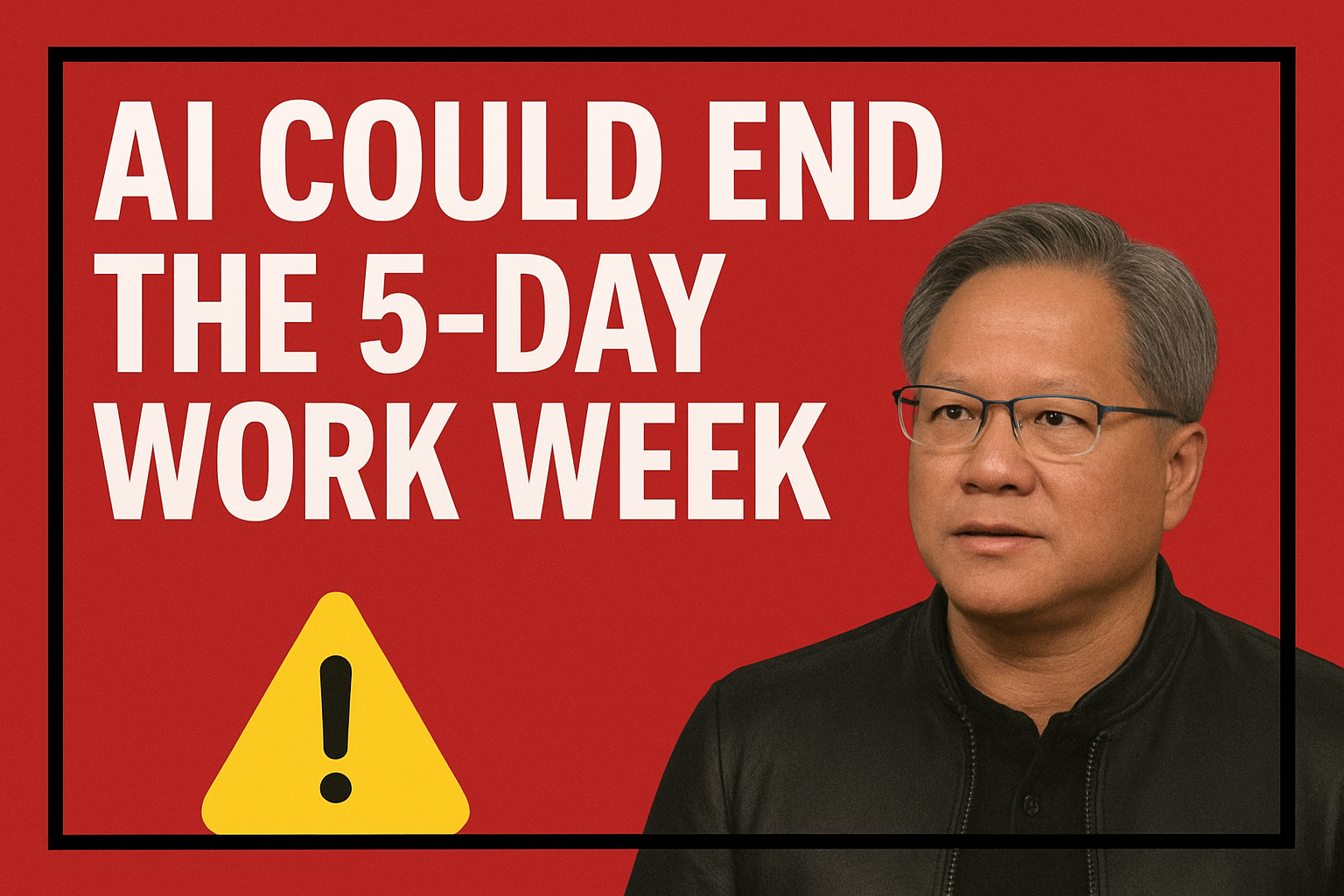
Nvidia CEO Jensen Huang Predicts AI Could Enable a Four-Day Work Week
Artificial Intelligence (AI) is reshaping industries at an unprecedented pace, and one of its most provocative promises is a complete rethinking of how we work. Recently, Nvidia CEO Jensen Huang suggested that the widespread adoption of AI could pave the way for a four-day work week – a vision that has sparked debate across business, technology, and policy circles.
The Future of Work Through AI
During a recent event, Huang compared the AI revolution to historical technological leaps such as the industrial revolution and the advent of the internet. Just as factories and automation reduced manual labor, he believes AI automation will dramatically improve productivity. By streamlining repetitive tasks, analyzing vast amounts of data, and assisting in decision-making, AI could free up human workers to focus on higher-level, creative, and strategic functions.
If productivity rises sharply while maintaining or even increasing business output, then working fewer days per week without reducing salaries may become viable. This is the foundation for Huang’s prediction: AI-driven efficiency could make a four-day work week not just possible, but economically sustainable.
The Benefits of a Four-Day Work Week
A shorter work week powered by AI could offer several advantages:
- Improved Work-Life Balance
With more free time, employees could spend additional days with family, pursue personal interests, or rest, leading to better overall well-being and reduced burnout. - Enhanced Productivity
Studies of companies that experimented with four-day schedules show that workers often accomplish as much if not more than in traditional five-day weeks. Pairing this trend with AI’s ability to handle repetitive workloads could further amplify output. - Talent Retention and Attraction
In competitive job markets, companies offering AI-enabled flexible schedules may become magnets for top talent, particularly among younger workers seeking modern approaches to work. - Environmental Impact
Fewer commutes and office hours could reduce energy consumption and carbon emissions, aligning with global sustainability goals.
The Challenges Ahead
However, Huang’s vision also comes with important caveats. Transitioning to a four-day work week isn’t as simple as flipping a switch. Several challenges remain:
- Job Displacement Concerns: While AI boosts efficiency, it also threatens to replace certain roles. Without careful planning, the productivity gains may not translate into shorter work weeks for displaced workers.
- Unequal Access: Not all industries or job types can benefit equally from AI. Knowledge work and technology sectors may see faster gains, while sectors like healthcare, construction, or retail may struggle to reduce working days.
- Cultural Resistance: Many businesses remain rooted in traditional notions of productivity tied to hours spent rather than results achieved. A mindset shift will be essential.
- Regulatory Frameworks: Governments may need to revisit labor laws, minimum wage standards, and worker protections to ensure AI-driven efficiencies benefit employees as well as employers.
A Balanced Outlook
Huang’s prediction reflects both optimism and pragmatism. He acknowledged that while AI might unlock the potential for reduced working hours, the transition will depend on policy decisions, corporate culture, and economic models. The central question isn’t just whether AI can enable a four-day work week – it’s whether society is ready to embrace the change.
For workers, this future could mean more fulfilling lives with less stress and more opportunities for creativity. For companies, it could result in better productivity, employee loyalty, and cost savings. But realizing this vision will require cooperation between technology leaders, governments, and businesses.
Conclusion
The prospect of a four-day work week, once considered utopian, is now entering mainstream discussion thanks to advances in AI. Nvidia CEO Jensen Huang’s bold prediction highlights the transformative role of AI in shaping the future of work. While challenges remain, the possibility is real – and the decisions made today will determine whether AI becomes a tool for empowering workers or merely a driver of efficiency gains for corporations.
As the AI era unfolds, one thing is clear: the future of work is no longer about working harder, but working smarter.
Sources
https://fortune.com/2025/08/29/nvidia-ceo-jensen-huang-4-day-work-week-productivity
https://www.entrepreneur.com/business-news/nvidia-ceo-some-jobs-will-disappear-as-ai-advances/496488